

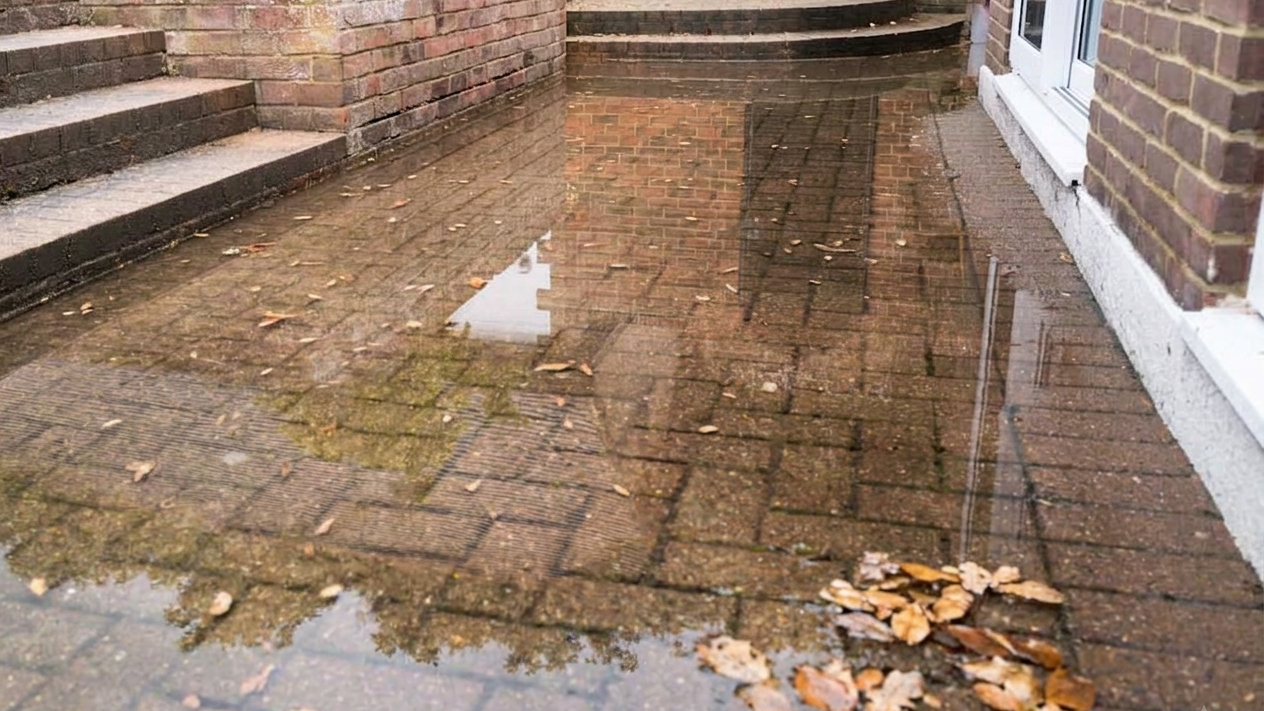
A brick paver patio should be a durable, attractive part of your outdoor space. But when water repeatedly collects on the surface instead of draining properly, it can become a warning sign that the paver system needs attention.
Standing water can be associated with low spots, settling, shifting pavers, and drainage problems. Over time, these issues can affect the appearance, safety, and performance of a patio. Recognizing the signs early gives homeowners an opportunity to address the underlying problem through professional brick paver repair, brick paver restoration, and ongoing brick paver maintenance.
Brick Paver Creations specializes in maintaining, restoring, and extending the life of existing brick paver surfaces, with services including repair, restoration, cleaning, and sealing. The company serves homeowners throughout the Greater Chicago Metropolitan Area and has more than 35 years of construction experience.
Why Standing Water Is a Warning Sign
A low spot that holds water after rain may indicate that a section of the patio has settled or shifted. Brick Paver Creations specifically identifies low spots that hold water after rain, sunken and uneven pavers, and water pooling as common paver problems.
When water repeatedly collects in the same location, simply cleaning the surface does not address the underlying concern. The pavers may need to be inspected, leveled, or restored so the surface can return to proper grade and drainage.
How Settling Can Create Water-Pooling Problems
Brick pavers can sink, shift, separate, or become uneven because of factors identified by Brick Paver Creations such as weather, poor drainage, settling base materials, heavy traffic, and edge restraint failure.
Once a section settles, the resulting low spot can become an area where water collects. This creates a cycle in which the visible symptom—standing water—is connected to a deeper paver repair issue.
Professional brick paver repair begins with inspecting the affected area and the underlying base rather than simply treating the surface.
Water Pooling Can Affect Patio Safety
Standing water is not only an appearance concern. Uneven and settling pavers can create trip hazards, while water pooling can create drainage problems.
For homeowners, this means a patio that looks slightly uneven should not necessarily be treated as a cosmetic issue. A professional inspection can determine whether the surface requires a minor adjustment or more extensive brick paver restoration services.
Brick Paver Creations states that its repair process is designed to restore both the appearance and structural integrity of the paver surface.
What Happens During Professional Brick Paver Repair?
When a patio has settling or drainage-related concerns, Brick Paver Creations follows a structured repair approach.
The process includes:
Removing affected pavers carefully.
Inspecting the base and surrounding area.
Adding or regrading compacted base material when needed.
Reinstalling and properly leveling the pavers.
Repairing or replacing damaged edge restraints.
Compacting and stabilizing the repaired section.
Preparing the surface for cleaning, sanding, and sealing.
This approach is important because cleaning and sealing an uneven or failing paver surface will not correct the underlying problem.
Why Proper Base Preparation Matters
The condition beneath the visible pavers can have a major effect on patio performance. Brick Paver Creations explains that its restoration process includes inspecting and repairing the base, with proper drainage and stability being part of the preparation.
If a patio has low areas holding water, addressing the base and grade can be more appropriate than simply applying a surface treatment.
This is one reason homeowners looking for brick paver repair near me should consider whether the company evaluates the underlying paver system rather than focusing only on its appearance.
How Loose Joints Can Contribute to Patio Problems
Joint condition is another important part of brick paver maintenance. Brick Paver Creations identifies loose joints and weeds as common paver problems, noting that missing sand can allow weeds and instability.
Its restoration process includes polymeric sand application to create strong binding and help prevent weed growth between pavers.
Keeping joints properly maintained supports the overall stability of the surface and is an important part of protecting an existing patio.
Where Brick Cleaning and Sealing Fit In
Brick cleaning services are useful for removing dirt, grime, algae, moss, weeds, stains, and discoloration from paver surfaces. Brick Paver Creations explains that professional cleaning also prepares pavers for fresh joint sand and sealing.
After cleaning, the company applies polymeric sand after allowing the patio to dry, followed by a solvent-based paver sealer. Its sealing service is designed to enhance the natural appearance of pavers while providing protection against weathering, fading, and wear.
However, sealing should not be viewed as a replacement for structural repair. If pavers are already uneven or failing, Brick Paver Creations recommends repairing and stabilizing the surface before cleaning and sealing.
Signs Your Brick Paver Patio Needs Attention
Homeowners should pay attention when they notice:
Water collecting in low spots after rain
Sunken or uneven pavers
Loose or shifting pavers
Separation between pavers
Loose joints
Weed growth between pavers
Damaged or cracked pavers
Drainage problems
These signs do not necessarily mean that an entire patio needs extensive restoration. A professional assessment can identify the affected areas and determine an appropriate repair plan.
Why Preventive Brick Paver Maintenance Matters
Regular brick paver maintenance can help homeowners identify developing problems before they become larger restoration projects.
Brick Paver Creations specializes in ongoing maintenance, cleaning, sealing, repair, and restoration of existing brick paver surfaces. The company's experience includes patios, driveways, walkways, and other brick paver installations throughout the Greater Chicago Metropolitan Area.
For homeowners, the benefit is straightforward: instead of waiting until standing water accompanies widespread movement or unevenness, early inspection can help identify where the paver system needs attention.
Why Choose Brick Paver Creations?
Brick Paver Creations has specialized exclusively in maintaining, restoring, and extending the life of existing brick paver surfaces since its strategic focus shifted in 2020.
The company highlights more than 35 years of construction experience, local expertise with Chicago-area weather challenges, transparent pricing, realistic timelines, and honest assessments. Its services include paver sealing, deep cleaning, repair, restoration, and maintenance plans.
For homeowners seeking local brick paver experts, the company's focus on existing paver maintenance makes it a strong resource when a patio develops standing water, uneven areas, loose joints, or other signs of deterioration.
Frequently Asked Questions
Why does water stand on my brick paver patio?
Standing water can occur in low spots created by settling or shifting pavers, poor drainage, or changes in the supporting base.
Can standing water damage brick pavers?
Recurring water pooling can accompany underlying problems such as settling, shifting, and drainage issues. Professional brick paver repair can address the underlying surface and base conditions.
Can uneven brick pavers be repaired?
Yes. Brick Paver Creations removes affected pavers, inspects the base, adds or regrades compacted base material as needed, and reinstalls and levels the pavers.
Should I seal a patio that has standing water?
Structural or drainage problems should be addressed before cleaning and sealing. Brick Paver Creations specifically notes that sealing an uneven or failing surface will not correct the underlying problem.
Does brick cleaning help with patio maintenance?
Yes. Professional brick cleaning services remove dirt, grime, algae, moss, weeds, stains, and discoloration while preparing the surface for fresh joint sand and sealing.
What is included in brick paver restoration services?
Depending on the condition of the surface, restoration can include paver removal, base inspection and repair, leveling, edge restraint repair, stabilization, polymeric sand application, cleaning, and sealing.
Protect Your Brick Paver Patio from Long-Term Water Problems
Standing water should not be dismissed as a simple inconvenience. When water repeatedly collects on a brick paver patio, it can point to low spots, settling, shifting pavers, poor drainage, or problems with the supporting base.
Professional brick paver repair, brick paver restoration, brick cleaning, brick paver sealing, and ongoing brick paver maintenance can help address these concerns in the proper order. Repairing the underlying surface first, followed by cleaning, joint stabilization, and sealing when appropriate, provides a more complete approach to restoring an existing patio.
If your brick paver patio regularly holds water after rain or has developed uneven, sunken, or shifting areas, contact Brick Paver Creations for a consultation and service inquiry. With more than 35 years of experience maintaining and restoring brick paver surfaces, their team provides professional solutions for homeowners throughout the Greater Chicago Metropolitan Area.