

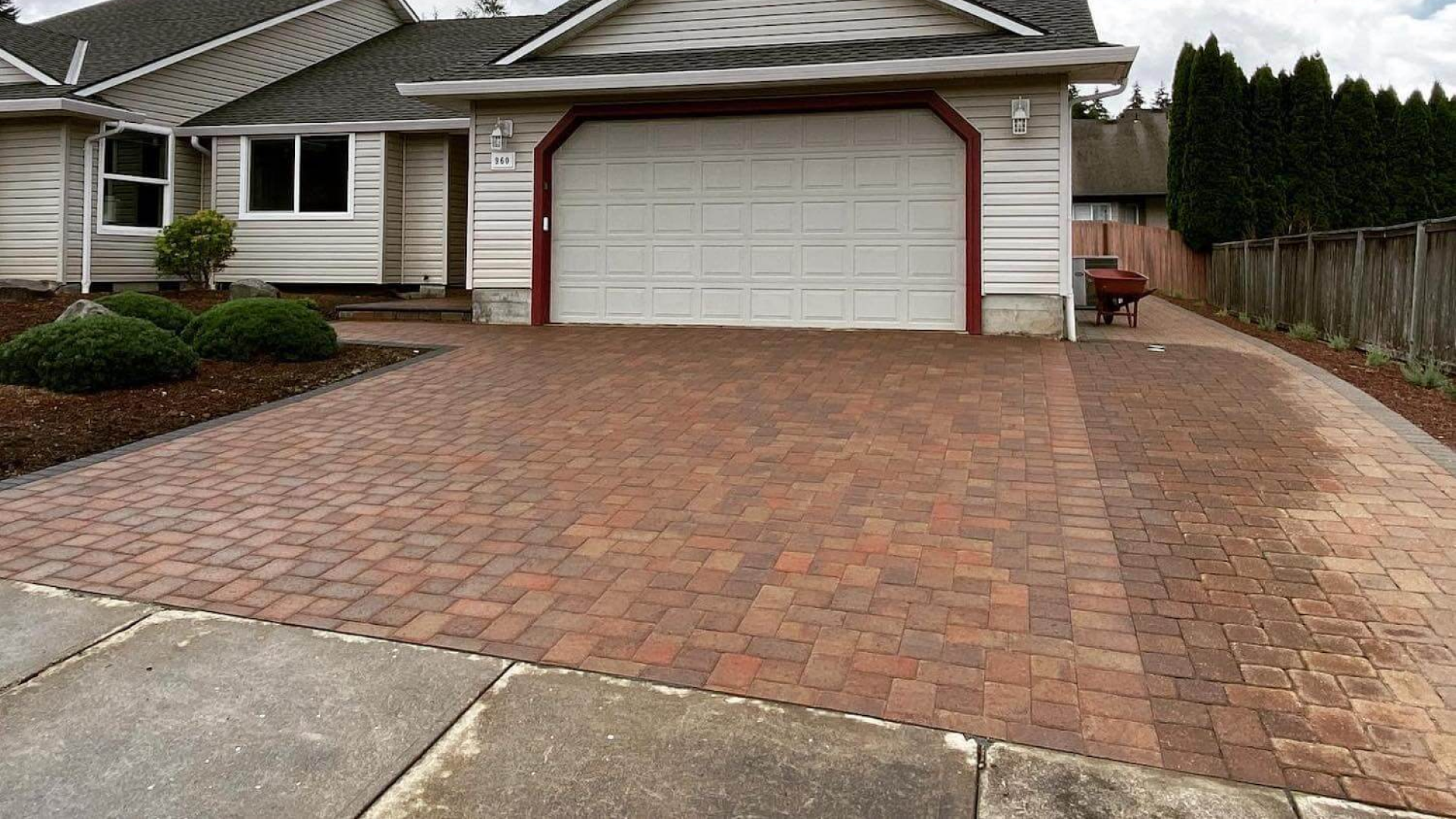
Weed growth between brick pavers is one of the most persistent issues homeowners face. Even after repeated cleaning, pressure washing, or chemical treatments, the weeds often return—sometimes even stronger than before.
The reason is simple: surface-level removal never fixes the underlying system failure.
At Brick Paver Creations, recurring weed growth is treated as a structural warning sign, not just a cosmetic issue. It usually points to deeper problems involving moisture intrusion, joint sand loss, drainage failure, and base instability.
Understanding these root causes is the key to stopping weeds permanently.
Moisture: The Hidden Driver of Weed Regrowth
Moisture trapped between and beneath pavers creates the perfect environment for weed seeds to germinate and spread.
When water repeatedly enters the system, it weakens the entire structure. This is especially common in areas with poor grading or runoff issues, as explained in detail in this guide on why drainage is the silent killer of brick paver driveways and patios.
Moisture leads to:
Softened joint sand
Organic buildup inside joints
Constant damp conditions
Accelerated weed germination
Over time, this cycle becomes self-sustaining unless drainage and base conditions are corrected.
Related insight: how moisture beneath brick pavers leads to long-term structural failure.
Joint Sand Loss: The Real Reason Weeds Keep Coming Back
Joint sand is the locking system that holds pavers together. When it washes away due to rain, cleaning, or time, gaps begin to form.
Once this happens:
Seeds settle easily between joints
Pavers shift slightly and widen openings
Moisture penetrates deeper
Weed regrowth accelerates
A deeper breakdown of this issue can be found in brick paver joint sand 101.
In many cases, restoring joint integrity through benefits of professional joint sand application or upgrading to stabilized materials like polymeric sand is essential. Learn more in comparing polymeric sand vs traditional joint sand.
Without proper re-sanding, weeds will continue to return no matter how often they are removed.
Drainage Problems That Keep Feeding Weed Growth
Poor drainage is one of the most overlooked causes of recurring weed problems. When water collects in low areas, it keeps joints damp and weakens the foundation.
This leads to:
Continuous moisture retention
Base erosion under pavers
Uneven settling and shifting
Faster weed regrowth cycles
If drainage is not corrected, surface treatments alone will fail. Learn more in why brick pavers shift after heavy rainfall and how to fix it before damage spreads.
Why Sealing Is Critical for Long-Term Weed Prevention
One of the most effective ways to reduce weed growth is professional sealing. Sealing locks joint sand in place and reduces moisture penetration.
At Brick Paver Creations – Paver Sealing & Cleaning, sealing is performed as part of a full system restoration approach.
Sealing helps:
Stabilize joint sand
Block moisture entry
Reduce seed infiltration
Strengthen surface durability
For a deeper understanding, see brick paver sealing guide and step-by-step brick paver sealing.
Avoid common errors by reviewing brick paver sealing mistakes.
Sealing also provides long-term cost savings, as explained in how sealing saves homeowners money.
Base Instability: The Problem Beneath the Surface
Sometimes the issue is not on top—but underneath.
A weakened or poorly compacted base allows movement between pavers, which opens new spaces for weeds to grow. Over time, this leads to sinking, shifting, and recurring joint failure.
This is why professional brick paver repair and restoration is often required instead of repeated surface cleaning.
Related resources include:
Why DIY Weed Removal Always Fails Long-Term
DIY weed removal methods like pressure washing or chemical sprays may remove visible growth, but they often make the problem worse.
Common issues include:
Loss of joint sand during cleaning
Increased gaps between pavers
No drainage correction
No base stabilization
This creates a repeating cycle where weeds return faster after every cleanup.
A professional approach focuses on full-system repair, not just surface treatment.
The Professional Solution to Permanent Weed Control
At Brick Paver Creations, long-term weed prevention is achieved through a complete restoration process:
Deep cleaning and surface preparation
Joint sand replacement and stabilization
Structural brick paver restoration services
Professional sealing protection
Drainage and leveling corrections
You can explore more about maintenance strategies in the Brick Paver Creations blog hub.
Additional helpful reads:
Why Weed Growth Should Never Be Ignored
Weeds between pavers are more than an inconvenience—they are often the first visible sign of system failure.
Left untreated, they can lead to:
Uneven surfaces
Water damage beneath pavers
Structural shifting
Costly full replacements
Understanding early warning signs can prevent expensive repairs later.
About Brick Paver Creations
With over 35 years of experience, Brick Paver Creations – About Us specializes in long-term solutions for paver repair, restoration, cleaning, and sealing.
They focus on restoring existing hardscapes instead of unnecessary replacement, ensuring durability and visual appeal.
Contact for Professional Help
If you are dealing with recurring weed growth, professional intervention may be required.
Call: (708) 372-8481
Email: brickpavers@comcast.net
Final Takeaway
Weeds between brick pavers are not random—they are a symptom of deeper issues involving moisture, joint sand failure, drainage problems, and base instability.
The only lasting solution is a full-system approach combining cleaning, repair, restoration, and sealing.
For more information or professional service, visit Brick Paver Creations.