

Introduction
A brick paver patio, driveway, or walkway can look attractive for years, but individual brick pavers may eventually crack, chip, stain, or become uneven. A heavy vehicle might damage one section of a brick paver driveway. A dropped object could break a brick paver on a patio. In other cases, freeze-thaw cycles, shifting soil, or water movement may cause a few brick pavers to settle or loosen. When damage appears, homeowners often assume the entire paved surface needs to be replaced. That is not always necessary. Individual damaged brick pavers can often be removed and replaced during brick paver restoration without rebuilding the entire patio, driveway, or walkway. The key is identifying why the damage occurred and checking the condition of the surrounding installation. Replacing a broken brick paver may solve the immediate problem, but if the base beneath it has settled or drainage is causing movement, the underlying issue needs attention too. Understanding how individual brick paver replacement works can help homeowners make practical repair decisions, preserve the appearance of their outdoor spaces, and avoid unnecessary reconstruction. It also explains why professional brick paver repair involves more than simply pulling out a damaged brick and putting another one in its place.
Can Individual Brick Pavers Be Replaced Without Replacing the Entire Surface?
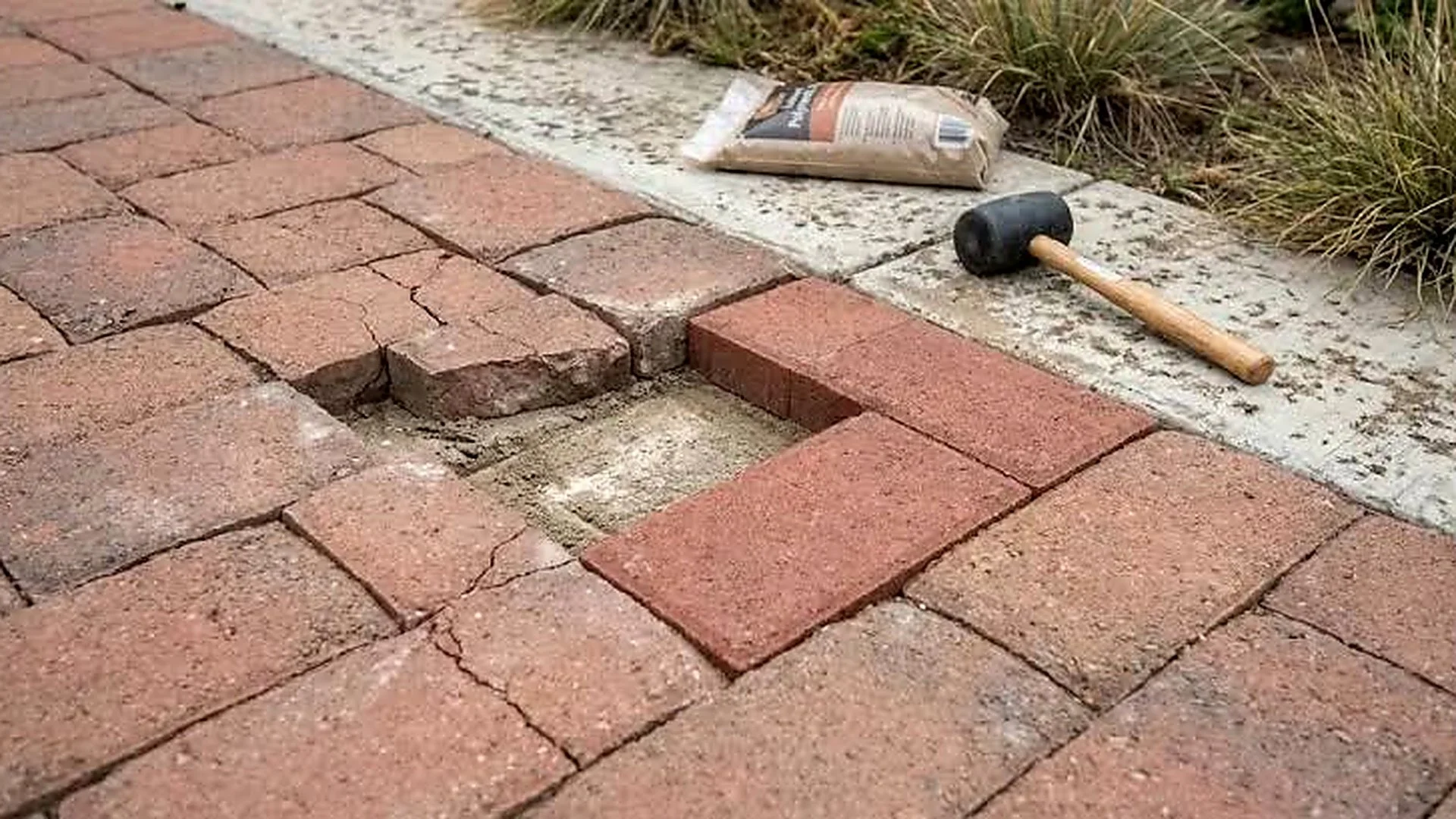
Yes. Individual brick pavers can often be replaced while leaving the surrounding installation intact. This is one of the advantages of a properly installed interlocking brick paver system. Unlike a continuous concrete slab, a brick paver surface consists of separate units placed together over a prepared base and bedding layer. Each paver contributes to the overall surface, but individual units can generally be removed when they become damaged.
A targeted brick paver repair may be appropriate when:
One or a few brick pavers are cracked or broken.
A brick paver has a deep chip or noticeable surface damage.
A small section has become stained beyond practical cleaning.
Individual brick pavers have shifted out of alignment.
A damaged brick paver creates a tripping concern.
A small area needs correction after utility or landscaping work.
The surrounding brick pavers do not automatically need to be removed just because one brick is damaged. However, the condition of the joints, bedding material, and base should be evaluated before deciding how much repair is necessary.
Why Interlocking Brick Pavers Allow Individual Repairs
Interlocking brick pavers are installed as separate units that work together to create a stable paved surface. Joint sand fills the spaces between the pavers, helping them stay in position and distribute movement across the installation. This design makes localised brick paver repairs possible. A damaged unit can often be lifted out, the area beneath it inspected, and a replacement brick paver installed. The process requires care because neighbouring pavers may be tightly fitted together. Removing a brick without disturbing the surrounding pattern or damaging nearby units takes the right tools and technique.
When Is Individual Brick Paver Replacement a Good Option?
Spot replacement is usually worth considering when the damage is limited and the surrounding brick paver installation remains in good condition. For example, imagine a homeowner has a brick paver walkway with one cracked paver near the front steps. The remaining surface is level, the joints are reasonably intact, and there are no signs of widespread settling. Replacing the damaged brick paver may be sufficient. By comparison, if several brick pavers are sinking, joints are opening across a large area, and water regularly collects on the surface, a larger brick paver restoration project may be necessary. Replacing individual bricks without correcting the underlying problem could lead to repeated repairs. Homeowners can learn more about when to choose restoration versus full brick paver replacement.
What Causes Individual Brick Pavers to Become Damaged?
Understanding the cause of brick paver damage is an important part of deciding how to repair it. A cracked brick paver and a sunken brick paver may look like similar maintenance problems, but they often require different solutions.
Heavy Weight and Impact
Brick pavers installed in driveways must withstand regular vehicle traffic. However, concentrated weight, heavy equipment, or an accidental impact can damage individual units.
Common examples include:
A vehicle repeatedly driving over a weak section of brick paving.
A heavy object falling onto a brick paver patio.
Construction equipment crossing an area not designed for its weight.
A vehicle turning sharply while stationary.
A heavy load being placed on a small section of brick pavers.
A cracked or chipped brick paver caused by impact may be replaceable without extensive work if the surrounding base remains stable. Repeated or excessive vehicle weight can also contribute to broader surface problems, as explained in how heavy loads impact brick paver surfaces.
Freeze-Thaw Cycles
Chicago-area winters can expose outdoor brick paver surfaces to repeated freezing and thawing. Water can enter small spaces around pavers and within joints. As temperatures change, moisture can contribute to movement, deterioration, or surface damage. Not every crack in a brick paver is caused by freezing temperatures, but seasonal weather can make existing weaknesses more noticeable. Proper drainage, sound brick paver installation practices, and routine maintenance help reduce moisture-related problems.
Settling Soil and Base Movement
Brick pavers depend on a properly prepared base for support. If the soil beneath the installation shifts or the base material becomes uneven, individual brick pavers may settle.
This can result in:
Low spots in the brick paver surface.
Uneven walking surfaces.
Open or widening joints.
Brick pavers that rock when stepped on.
Edges that no longer align.
Replacing a sunken brick paver without correcting the base may only provide a temporary improvement. The supporting material needs to be inspected and adjusted before the brick paver is reinstalled. Compacted soil and its effect on brick paver stability can also help explain why support conditions matter.
Water Drainage Problems
Water that collects beneath or around a brick paver installation can contribute to erosion, movement, and instability. For example, a downspout that releases water directly beside a brick paver patio may gradually affect the supporting material. Poor surface drainage can also allow water to collect in low areas. If a brick paver keeps sinking in the same location, the repair should include an assessment of where the water is going and whether the base is being affected. Learn more about how standing water shortens the life of brick paver patios and why proper drainage matters for brick paver driveways and patios.
Weeds, Roots, and Joint Deterioration
Weeds growing between brick pavers are not always a sign of serious structural damage. However, vegetation can make joints harder to maintain, and nearby tree roots may exert pressure on a paved area. Roots can lift brick pavers, disturb their alignment, and create uneven sections. In these cases, replacing individual bricks may not be enough unless the source of movement is addressed. Homeowners can also review how tree roots damage brick paver driveways and walkways.
How Are Individual Damaged Brick Pavers Replaced?
Professional brick paver replacement involves several steps. The goal is to remove the damaged unit, inspect the supporting materials, and restore the surface so the replacement fits correctly.
Step 1: Inspect the Damaged Brick Paver Area
The repair begins with an assessment of the affected brick paver and its surroundings.
A contractor may check:
Whether the brick paver is cracked, chipped, loose, or sunken.
Whether neighbouring brick pavers are stable.
Whether joint sand is missing.
Whether the surface has drainage problems.
Whether the base appears to have settled.
Whether similar brick paver damage exists elsewhere.
This inspection helps determine whether the repair can remain localised or whether a larger section needs attention. A professional brick paver site inspection can help identify problems that may not be obvious from the surface.
Step 2: Remove the Damaged Brick Paver
The damaged brick paver must be removed carefully without breaking nearby units. Specialised paver extraction tools can help lift a unit from the installation. In some situations, the damaged brick may need to be broken into smaller pieces to make removal easier. The surrounding joints may need to be cleared before extraction. Careful work reduces the risk of disturbing the neighbouring brick paver pattern.
Step 3: Inspect the Bedding Layer and Base
Once the brick paver is removed, the material underneath becomes visible. The contractor can check whether the bedding sand is compacted, whether the base is stable, and whether water or soil movement has affected the area. If the supporting layer is uneven, it may need to be corrected before installing the replacement brick paver. Simply placing a new paver over a low or unstable spot can leave the surface uneven. Proper base preparation is an important part of a lasting repair.
Step 4: Prepare the Area
The opening is cleaned, and the bedding material is adjusted as needed. The goal is to create a firm, even support surface at the correct height. The preparation must account for the thickness of the replacement brick paver and its relationship to the surrounding units. The finished surface should not leave the replacement brick noticeably higher or lower than the neighbouring brick pavers.
Step 5: Install the Replacement Brick Paver
The replacement brick paver is positioned in the opening and adjusted to match the existing layout. Its edges should align with the surrounding pavers, and the surface should sit at the appropriate height. Depending on the installation, the paver may need careful tapping or adjustment to achieve a consistent fit. A replacement brick paver that is too thick, too thin, or shaped differently can create an uneven appearance or interfere with the joint spacing.
Step 6: Refill the Joints and Finish the Surface
Once the replacement brick paver is positioned, joint material is added to fill the spaces around it. The brick paver surface may then need appropriate compaction, followed by additional joint sand if required by the installation method and product specifications. The right material and application matter; polymeric sand is one option used to help stabilise paver joints when suitable for the installation. The repaired area should be checked for alignment, stability, and consistent joint spacing.
How Do You Match a Replacement Brick Paver to the Existing Installation?
Matching the replacement brick paver can be one of the more challenging parts of a localised repair. Even when a paver has the same general shape, differences in colour, texture, size, and finish may make it stand out.
Match the Size and Shape
The replacement brick paver should have dimensions that fit the existing pattern. Brick pavers come in different shapes and thicknesses. A rectangular paver cannot always replace a unit from a patterned installation, and a slightly different thickness may create a raised or sunken spot. Before selecting a replacement, identify the original brick paver's dimensions and profile.
Match the Colour
Colour matching can be difficult, especially if the existing brick pavers have been exposed to years of sunlight, moisture, dirt, and weather. A new brick paver from the same product line may still look different from an older one. Existing units may have developed a weathered appearance that cannot be duplicated immediately. If spare brick pavers from the original installation are available, they can be a useful starting point.
Match the Texture and Finish
Brick pavers may have smooth, textured, tumbled, or antiqued finishes. Even a close colour match can look noticeably different if the surface texture is inconsistent. Compare the replacement brick paver with several surrounding units rather than choosing based on one brick alone.
What If the Original Brick Paver Is Discontinued?
Finding an exact match may be difficult if the original product is no longer manufactured.
Possible approaches include:
Checking for leftover brick pavers from the original project.
Contacting the original supplier or manufacturer.
Looking for a similar size, colour, and texture.
Using a visually compatible replacement in a less noticeable location.
Reworking a small section if a close match cannot be found.
The best option depends on the layout and how visible the brick paver repair will be.
Can Individual Brick Pavers Be Replaced in a Patio, Driveway, or Walkway?
Yes, but the location and use of the paved surface affect the brick paver repair approach.
Brick Paver Patio Repairs
Patios often have decorative patterns and several colours or shapes. A damaged brick paver may be replaced individually if the surrounding installation is stable. The contractor should also consider patio furniture placement, outdoor cooking areas, and drainage. A brick paver that rocks underfoot or sits higher than its neighbours can become a tripping concern. If damage is concentrated near a retaining wall, garden bed, or downspout, the surrounding conditions should be inspected too.
Brick Paver Driveway Repairs
Driveways experience repeated vehicle weight and turning forces. Individual brick paver replacement can work well when damage is limited, but the supporting base needs particular attention. A replacement brick paver should be appropriate for the driveway application and should sit securely within the surrounding pattern. If several brick pavers have shifted under vehicle traffic, the problem may involve base preparation, edge restraint, or drainage rather than isolated brick damage.
Brick Paver Walkway Repairs
Walkways need a reasonably level surface for comfortable and safe foot traffic. A single raised or sunken brick paver can become a tripping hazard, even if it looks like a minor cosmetic issue. Individual brick paver replacement or resetting may correct the problem when the underlying area is stable. For a walkway with repeated uneven sections, a broader brick paver levelling repair may be more appropriate.
Is Replacing a Damaged Brick Paver Different From Resetting a Sunken Paver?
Yes. These are two different brick paver repair procedures, and identifying the correct one helps avoid unnecessary replacement.
When Does a Brick Paver Need Replacement?
Replacement is usually appropriate when the brick paver itself is physically damaged beyond practical repair. A deep crack, broken corner, or significant structural break may make it difficult to restore the unit's original appearance and stability.
When Can a Brick Paver Be Reset Instead?
A brick paver that is intact but uneven may not need to be replaced. If the brick is in good condition, it can often be lifted, the bedding material corrected, and the same brick paver reinstalled. This preserves the original unit and avoids unnecessary material replacement.
Should You Replace One Brick Paver or Restore a Larger Section?
The right brick paver repair depends on how widespread the damage is and what caused it.
Signs That Individual Brick Paver Replacement May Be Enough
A targeted repair may be appropriate when:
Only one or two brick pavers are damaged.
The surrounding brick paver surface remains level.
Joint spacing is generally consistent.
There are no signs of widespread base movement.
Water drains away from the affected area.
Nearby brick pavers feel stable underfoot.
In these situations, a localised brick paver repair can preserve most of the original installation.
Signs That a Larger Brick Paver Restoration May Be Necessary
A broader repair deserves consideration when:
Several brick pavers are sinking or shifting.
Large sections have uneven joints.
Water repeatedly collects on the surface.
The edge restraints are failing.
The base appears unstable.
Similar brick paver damage keeps returning after repairs.
A larger brick paver restoration may involve lifting multiple pavers, correcting the bedding and base, improving drainage, and reinstalling the existing units. The objective is to correct the source of the problem rather than repeatedly repairing the visible symptoms. Homeowners can learn more about how expert paver repair solves uneven and sunken areas.
Can Replacement Brick Pavers Be Reused From Another Part of the Property?
Sometimes. If the homeowner has spare brick pavers or an area of the installation that can be modified, existing materials may provide a useful source for replacement units. For example, a hidden section beneath a large planter or outdoor feature might contain brick pavers that can be relocated. However, moving bricks from one area to another can create a new gap that also needs to be addressed.
Before reusing brick pavers, check that they are:
The correct size and thickness.
In good structural condition.
Similar in colour and texture.
Suitable for the intended traffic and application.
Free from damage that could affect installation.
Using existing brick pavers can help with visual consistency, especially when the original product is no longer available.
Common Mistakes to Avoid During Individual Brick Paver Replacement
A small brick paver repair may look simple, but poor installation can create additional problems.
Installing a New Brick Paver Without Checking the Base
A replacement brick paver may look correct initially but become uneven if the bedding layer beneath it is unstable. Always investigate the support material before reinstalling a brick paver.
Choosing a Replacement Based Only on Colour
A brick paver that looks similar in a store may not match the original installation in thickness, texture, or dimensions. Compare all these characteristics before selecting the replacement.
Using the Wrong Joint Material
Joint material plays a role in maintaining the spacing and stability of an interlocking brick paver surface. The correct product depends on the installation, joint width, and manufacturer's recommendations. Ordinary loose soil is not a substitute for suitable brick paver joint material.
Ignoring Drainage Problems
If water repeatedly collects around the same brick paver, replacing the unit without addressing drainage may not solve the underlying issue. Check downspouts, surface slope, and nearby drainage conditions before completing the brick paver repair.
Treating Every Uneven Brick Paver as a Broken Brick Paver
An intact brick paver that has settled may only need to be reset. Replacing it unnecessarily can add cost without addressing the actual problem.
How Professional Brick Paver Restoration Helps Preserve Existing Surfaces
Professional brick paver restoration is not limited to replacing visibly damaged units. It involves evaluating the entire paved area to determine which parts need repair, cleaning, joint maintenance, or sealing. For homeowners, this distinction matters because a surface can have several different problems at once. One brick paver may be cracked, another may have settled, and the surrounding joints may need attention. A brick paver restoration assessment can help identify the appropriate work instead of treating every issue as a replacement project.
Cleaning Before Brick Paver Restoration
Cleaning removes accumulated dirt, organic growth, and surface buildup. It can also make existing brick paver damage easier to identify. The cleaning method should be appropriate for the paver material and installation. Excessive pressure or unsuitable cleaning products can damage surfaces or disturb joint material. Homeowners can review why brick paver cleaning should precede sealing to understand why surface preparation matters.
Brick Paver Joint Sand Maintenance
Joint sand helps fill the spaces between brick pavers and contributes to the stability of the interlocking system. If joints are depleted, loose, or deteriorated, replenishing the appropriate material may be part of brick paver maintenance and restoration. The condition of the joints should be checked after repairs and cleaning. Learn more about the benefits of professional joint sand application.
Brick Paver Sealing After Repairs
Brick paver sealing is a separate maintenance step that may be considered after cleaning and repairs are completed. A suitable sealer can help protect the brick paver surface and influence its appearance, depending on the product selected. However, sealing does not repair a damaged base, correct drainage, or make a broken brick paver structurally sound. The surface should be properly prepared, and the product should be compatible with the brick pavers and joint materials.
Brick Paver Restoration in Homer Glen and the Chicago South Suburbs
Outdoor brick paver surfaces in the Chicago area experience changing weather, regular use, and seasonal temperature swings. Over time, these conditions can contribute to cracks, fading, loose joints, and uneven areas. Brick Paver Creations is based in Homer Glen, Illinois, and serves homeowners throughout the Greater Chicago metropolitan area, particularly the Chicago South Suburbs. Its brick paver maintenance and restoration work includes cleaning, sealing, repair, and restoration of existing paved surfaces. For homeowners dealing with a few damaged brick pavers, the first step is determining whether the issue is isolated or connected to a larger problem. A cracked brick paver may need replacement, while an intact but sunken paver may only need to be reset. An assessment of the surrounding surface, joint material, base, and drainage can help identify the right brick paver repair approach. This allows homeowners to make an informed decision about preserving their existing patio, driveway, or walkway.
Conclusion
Individual damaged brick pavers can often be replaced during brick paver restoration without removing an entire patio, driveway, or walkway. Interlocking brick paver systems allow individual units to be lifted and replaced when the damage is limited, and the surrounding installation remains stable. The most important part of the repair is understanding why the brick paver became damaged. A broken brick may need replacement, while a sunken but intact unit may only require resetting. If the base has shifted or drainage is causing repeated movement, the underlying issue should be corrected before the brick paver is reinstalled. Matching the replacement brick paver's size, thickness, colour, and texture also helps maintain a consistent appearance. Careful removal, proper base preparation, accurate installation, and suitable joint material all contribute to a successful brick paver repair. Before deciding on a full replacement or localised repair, have the damaged area evaluated. A well-planned brick paver restoration can preserve much of the existing paved surface while addressing the specific areas that need attention.
Frequently Asked Questions
1. Can you replace just one damaged brick paver?
Yes. A single cracked, chipped, or broken brick paver can often be removed and replaced without disturbing the entire paved surface. The surrounding installation and base should be checked to make sure the damage is isolated.
2. Do damaged brick pavers need to be replaced or can they be repaired?
It depends on the type and extent of damage. A deeply cracked or broken brick paver generally needs replacement, while an intact paver that has shifted or settled may be lifted and reset.
3. Can new brick pavers match an older patio?
They can sometimes be matched closely by comparing size, shape, colour, and texture. However, older brick pavers may have weathered over time, so even a product from the same manufacturer may look slightly different.
4. How are individual brick pavers removed without damaging nearby pavers?
A contractor can use specialised extraction tools to lift the damaged brick paver and clear the surrounding joints. Careful removal helps protect adjacent pavers and preserve the existing pattern.
5. Why do individual brick pavers crack or become uneven?
Common causes include heavy impact, vehicle loads, freeze-thaw conditions, soil movement, poor drainage, and problems with the supporting base. Identifying the cause helps determine whether brick paver replacement alone will be sufficient.
6. Can sunken brick pavers be fixed without replacing them?
Often, yes. If the brick pavers are still in good condition, they can be lifted, the bedding material adjusted, and the original units reinstalled at the correct height.
7. Does replacing a few brick pavers require resealing the entire patio?
Not always. Sealing requirements depend on the condition of the existing brick paver surface, the repair work, and the sealer manufacturer's instructions. The repaired area should be properly prepared before any sealer is applied.
8. Can individual driveway brick pavers be replaced if they are damaged by a vehicle?
Yes, provided the damage is localised, and the supporting base remains stable. If repeated vehicle traffic has caused several brick pavers to shift, the affected section may need more extensive repair.
9. What happens if replacement brick pavers are no longer available?
A contractor can look for leftover materials, contact the original supplier, or identify a compatible alternative. If an exact match is unavailable, a small section may need to be adjusted to create a more consistent appearance.
10. How do I know if my brick paver patio needs spot repairs or full restoration?
Spot repairs may be sufficient when only a few brick pavers are damaged, and the surrounding surface is stable. Widespread settling, recurring drainage problems, failing joints, or multiple uneven areas may indicate that a larger brick paver restoration is needed.
