

Introduction
Brick pavers are a popular choice for patios, driveways, walkways, and other outdoor spaces because they combine durability with a distinctive appearance. However, the strength of a brick paver surface depends on more than the individual pavers. The joints between them also play an important role in maintaining stability, limiting movement, and keeping the finished surface looking neat.
Polymeric sand for brick paver joints is a specialized jointing material designed to help keep these spaces filled and stable. Made primarily from sand blended with binding additives, it hardens after proper activation and curing. Compared with loose joint sand, it can provide greater resistance to erosion, reduce the loss of joint material, and make it more difficult for weeds to establish in properly filled gaps. These benefits can be especially relevant to homeowners in Chicago’s Southwest Suburbs, where outdoor hardscapes experience rainfall, temperature changes, snow, ice, and seasonal freeze-thaw cycles. Over time, these conditions can expose weak joints, drainage problems, and underlying installation issues. Learn more about how weather impacts brick paver integrity in the Midwest. Understanding how polymeric sand works can help homeowners choose appropriate materials, recognize signs of joint deterioration, and decide when a brick paver surface needs maintenance or more extensive restoration.
What Is Polymeric Sand for Brick Paver Joints?
Polymeric sand is a specialized joint-filling material consisting mainly of graded sand and polymeric binders. It is swept into the gaps between compatible pavers and activated with water according to the manufacturer's instructions. As the material cures, the binders help the sand particles adhere to one another, forming a firmer joint than ordinary loose sand. The finished joints help support the edges of neighbouring pavers while allowing the overall brick paver installation to function as a flexible surface.
How Is Polymeric Sand Different From Regular Brick Paver Joint Sand?
Traditional joint sand fills the spaces between brick pavers but generally remains loose. Rain, wind, foot traffic, vehicle tires, and routine cleaning can gradually displace it. Polymeric sand is designed to bind together after installation, helping the joints retain their material under normal use. For a closer comparison, see polymeric sand vs. traditional joint sand.
The key differences include:
Joint stability: Polymeric sand creates a more cohesive joint after proper curing.
Resistance to erosion: It generally resists ordinary joint-sand displacement better than unbound sand when installed correctly.
Weed management: Firmly filled brick paver joints leave less room for weeds to establish within the gaps.
Maintenance: Polymeric sand may reduce how often joint material needs replenishment.
Installation requirements: It requires careful preparation, surface cleanup, water activation, and curing.
Polymeric sand does not turn a brick paver patio or driveway into a solid concrete slab. It supports the joints, while the base, bedding layer, paver arrangement, and edge restraints provide other essential parts of the system.
How Does Polymeric Sand Help Stabilize Brick Paver Joints?
Polymeric sand supports brick paver joint stability through several related functions. Its performance depends on correct installation and the condition of the surrounding hardscape.
1. It Helps Hold Joint Sand Together
Loose sand can shift when exposed to rainfall, wind, or repeated traffic. As the material disappears from the joints, gaps become more noticeable and the edges of neighbouring brick pavers may receive less consistent support. Polymeric binders help sand particles adhere to one another after curing. This creates a firmer joint that is less likely to behave like loose grains under ordinary conditions. For example, a brick paver walkway that repeatedly loses joint sand after rainfall may benefit from a compatible polymeric sand product, provided the surface is structurally sound and the drainage conditions are suitable. Regular brick paver joint sand maintenance can also help homeowners recognize when joints need attention.
2. It Helps Reduce Lateral Movement Between Brick Pavers
Individual brick pavers can shift when the joints, edge restraints, or supporting base no longer provide adequate support. Movement may gradually create wider gaps, irregular lines, or chipped paver edges. Properly installed polymeric sand helps resist minor lateral movement by forming a more cohesive joint between adjacent pavers. This can be useful on patios, walkways, and compatible driveway installations that receive regular traffic. However, joint sand is only one part of paver stabilization. If the base has settled or the edge restraints have failed, polymeric sand alone will not prevent the pavers from continuing to move. Learn about how proper edge restraints prevent brick pavers from shifting over time.
3. It Helps Prevent Brick Paver Joint Sand From Washing Out
Rainwater can carry loose sand out of brick paver joints, especially on sloped surfaces or in areas where runoff flows across the paving with significant force. Polymeric sand is generally more resistant to this type of displacement once it has cured correctly. Keeping the joints filled helps preserve the finished appearance and reduces the need for frequent sand replacement. It is not completely waterproof, however. Concentrated runoff, poor drainage, unsuitable installation conditions, and prolonged water exposure can still contribute to joint deterioration. Understanding why drainage is critical for brick paver driveways and patios can help homeowners identify problems that jointing material alone cannot solve.
4. It Helps Discourage Weed Growth Between Brick Pavers
Weeds can establish themselves when seeds settle into joint gaps containing moisture and organic debris. Empty or poorly maintained brick paver joints provide more room for this process. Polymeric sand fills these spaces with a firmer material that can make it harder for weeds to establish within the joints. A properly finished surface also leaves fewer open gaps for leaves and other debris to collect. This does not guarantee permanent weed prevention. Seeds can germinate on top of the joints, and weeds may grow where the material cracks, deteriorates, or becomes contaminated with organic matter. For more maintenance ideas, see why weed growth between brick pavers keeps returning.
5. It Helps Maintain a Clean, Finished Brick Paver Appearance
Missing joint sand can make a patio, driveway, or walkway look worn even when the pavers themselves remain in good condition. Uneven gaps may also collect debris and make the surface appear poorly maintained. Polymeric sand helps create more consistent joints that complement the shape and pattern of the brick pavers. This can improve the appearance of a restored hardscape while supporting its everyday performance.
What Affects Polymeric Sand Performance in Brick Paver Joints?
The quality of the jointing material matters, but the surrounding installation is just as important. Polymeric sand performs best when the brick pavers are stable, the joints are properly prepared, and water drains as intended.
A Stable Base Beneath the Brick Pavers
The base provides much of the structural support for a brick paver surface. If it is poorly compacted, uneven, or affected by water movement, the pavers may settle or rock regardless of the jointing material. Before installing polymeric sand, inspect the surface for recurring low spots, widespread movement, and uneven areas. These signs may indicate that the base or bedding layer needs attention. Filling the joints without correcting significant settlement may provide only a temporary improvement. Read more about how compacted soil affects brick paver stability.
Correct Brick Paver Joint Width and Depth
Polymeric sand products have specific requirements for compatible pavers, joint widths, and joint depths. Not every product is appropriate for every brick paver installation. Joints that are too shallow may not contain enough material to form a durable fill. Very narrow, unusually wide, or irregular joints may require a product formulated for those conditions. Check the product label before purchasing polymeric sand, and confirm that its specifications match the paver type and joint dimensions.
Effective Drainage Around the Brick Paver Surface
Water should drain away without repeatedly carrying sand or soil out of the joints. Poor drainage can contribute to erosion, settlement, and recurring joint problems. Polymeric sand cannot correct an improper slope or a drainage issue. If water regularly pools on a brick paver patio or rushes through a walkway during heavy rainfall, the cause should be addressed before joint restoration. Homeowners can also review what to know about brick paver drainage slopes.
Suitable Weather During Installation
Temperature, humidity, and rainfall can affect how polymeric sand activates and cures. Requirements vary by product, so homeowners should not rely on a single weather rule for every formulation. Installing polymeric sand under unsuitable conditions can leave the joints weak or cause residue to develop on the brick paver surface. Follow the manufacturer's directions for temperature, surface dryness, watering, and protection from rain during curing.
How to Install Polymeric Sand Between Brick Pavers
Correct installation is essential for achieving stable joints. Even a suitable product can fail to perform as intended if the old material is not removed properly, the joints remain dirty, or the watering process is incorrect.
Step 1: Inspect the Brick Paver Surface
Examine the patio, driveway, or walkway for loose pavers, missing sand, damaged edges, settlement, and drainage problems. Brick pavers that rock or sit noticeably lower than neighbouring units may need to be lifted and reset. Installing new joint sand without correcting significant movement can leave the underlying problem unresolved. A professional brick paver site inspection can help identify issues that may not be obvious from the surface.
Step 2: Remove Old Joint Material and Debris
Remove existing joint sand and debris to the depth required by the selected polymeric sand product. The appropriate preparation method depends on the condition of the joints and the type of brick pavers. Careful cleaning can remove loose material, weeds, organic debris, and contaminants. If pressure-washing equipment is used, excessive pressure should be avoided because it can damage the pavers, erode the bedding layer, or displace base material. See how pressure washing can damage brick pavers.
Allow the joints and surface to dry as required by the product instructions.
Step 3: Repair and Prepare the Brick Paver Joints
Check that the joints are clear and the pavers are correctly positioned. Repair damaged areas and address loose edge restraints or other structural problems before adding new material. This preparation helps ensure that polymeric sand fills the intended spaces instead of covering problems that will continue to affect stability. For additional guidance, review the role of base preparation in successful brick paver repair.
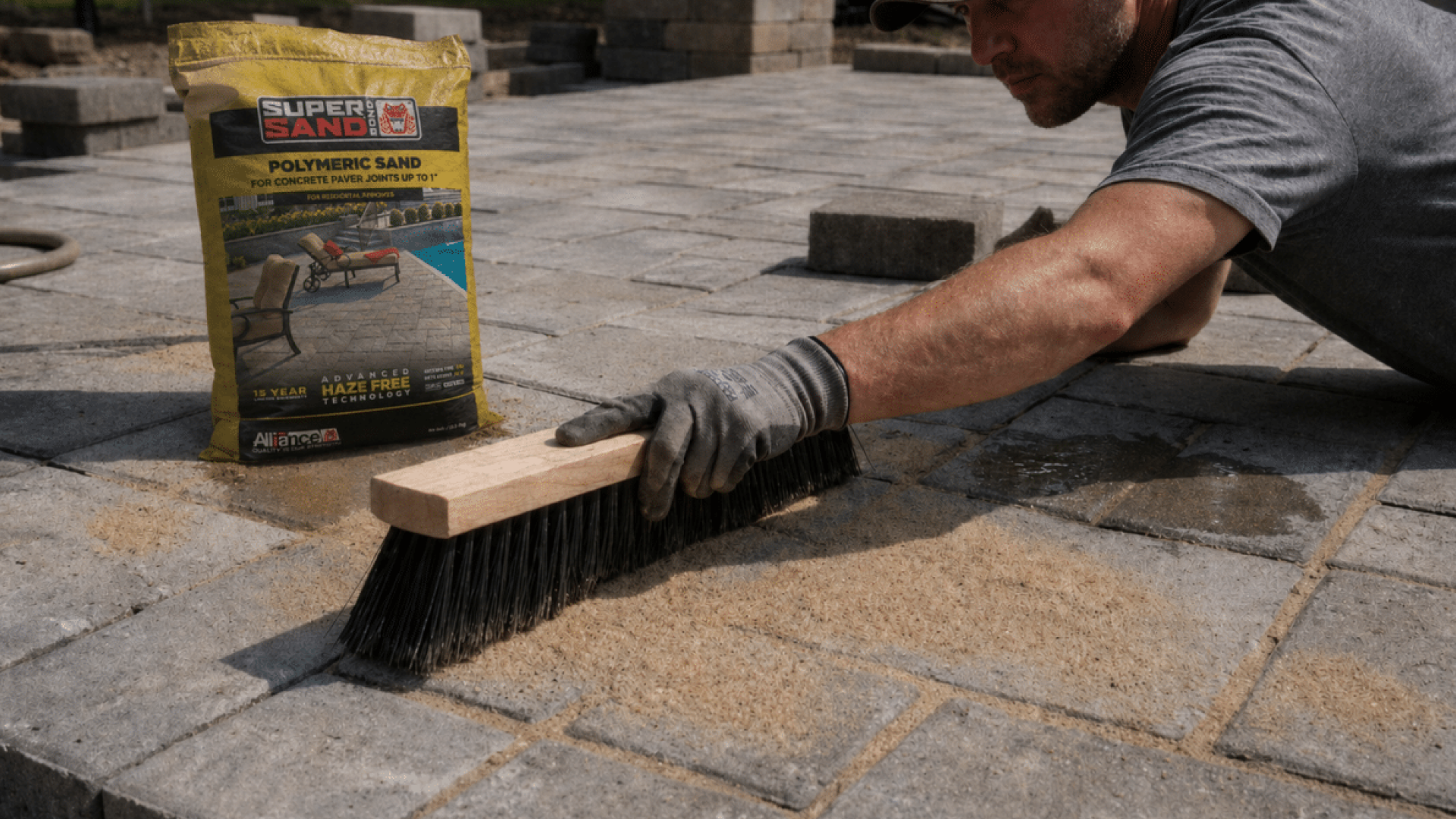
Step 4: Sweep Polymeric Sand Into the Joints
Spread the dry polymeric sand across the brick paver surface and sweep it into the gaps using the recommended method. The goal is to fill the joints evenly and minimize voids. Some products or installations may require additional sweeping or compaction to help the sand settle properly. Filling only the visible top of a deep joint may not provide the required material depth.
Step 5: Remove Excess Sand From the Brick Paver Surface
Clear excess sand and dust from the paver faces before activating the joints. Fine particles left on the surface may stick during watering and create a cloudy residue after curing. Use the cleanup method recommended by the manufacturer, especially on textured or porous brick pavers where residue can be harder to remove.
Step 6: Activate the Polymeric Sand With Water
Apply water according to the product instructions. Depending on the formulation, the process may involve controlled watering in stages. Too little water can prevent the binders from activating properly. Too much water or forceful spraying can wash material out of the joints before it sets.
Step 7: Protect the Brick Pavers During Curing
Keep foot traffic, pets, and vehicles off the surface for the period specified by the manufacturer. Protect the installation from rain and other conditions that could interfere with curing. The joints may look finished before the polymeric sand has fully cured. Waiting the recommended period helps the material develop its intended performance.
Polymeric Sand vs. Regular Sand for Brick Pavers
The right jointing material depends on the installation, maintenance needs, drainage conditions, and product compatibility.
When Polymeric Sand Is a Good Choice
Polymeric sand may be suitable when:
Joint sand repeatedly washes out of otherwise stable brick pavers.
The paver surface needs joint renewal.
The homeowner wants firmer joints and reduced routine sand replacement.
Weed growth in the brick paver joints is an ongoing maintenance concern.
The product is compatible with the pavers and joint dimensions.
When Regular Joint Sand May Be Appropriate
Traditional joint sand may be suitable for installations designed to use unbound sand or where the specified paving system calls for a particular jointing material. Some installations have specific requirements for drainage, movement, or joint construction. Polymeric sand should not automatically be treated as the best option for every brick paver surface. Neither material can compensate for a poor base, failing edge restraints, or inadequate drainage.
Common Problems With Polymeric Sand in Brick Paver Joints
Polymeric sand can develop problems if it is installed incorrectly or used in unsuitable conditions. Identifying the cause helps prevent repeated repairs.
Hazy Residue on Brick Pavers
A cloudy or pale film can appear when polymeric material remains on the paver surface during activation. Incomplete cleanup and incorrect watering are common contributing factors. Remove excess sand before wetting the joints and follow the manufacturer's cleanup instructions. If haze has already developed, avoid experimenting with harsh cleaners or acids. Use a treatment approved for the specific paver type and jointing product. Learn more about what causes white haze on brick pavers after sealing.
Soft or Crumbling Brick Paver Joints
Joints that remain soft or crumble may have received insufficient activation water, been installed in unsuitable weather, or been filled over contaminated or poorly prepared joints. Identify the cause before replacing the material. Adding more sand over a weak joint may not solve the problem if the underlying preparation or curing conditions were incorrect.
Washed-Out Polymeric Sand
Rain before the material has set sufficiently can displace newly installed polymeric sand. Incorrect watering during installation can cause similar problems. Choose a suitable installation window and observe the recommended curing period. If the joints continue to erode after proper installation, inspect the surface slope and drainage.
Cracked Joints or Recurring Separation
Cracks and separation can occur when brick pavers move, joint dimensions are unsuitable, or the material is exposed to conditions outside its intended use. Small, isolated defects may be repairable through localized maintenance. Widespread cracking or recurring movement usually calls for a broader inspection of the paving system. Learn about why brick pavers separate along edges.
Does Polymeric Sand Work in Chicago's Southwest Suburbs?
Polymeric sand can be useful for brick paver maintenance in the Chicago area, but seasonal weather makes installation quality and ongoing inspection especially important.
Freeze-Thaw Cycles and Winter Conditions
Water can enter small spaces around brick pavers. When temperatures drop, freezing water may contribute to movement or deterioration, particularly where drainage is poor or the base is already unstable. Polymeric sand helps keep joints filled and can reduce some forms of sand loss. It does not make a brick paver surface immune to freeze-thaw damage. Inspect the joints after winter, watch for pavers that have started to rock or settle, and address areas where water collects. Snow-removal methods and de-icing products should also be compatible with the pavers and jointing material. For more detail, see how winter freeze-thaw cycles damage brick pavers.
Rainfall and Surface Runoff
Heavy rainfall can expose weak joints and drainage problems. Check for standing water, channels that carry sand away, and gaps that gradually become deeper. If runoff repeatedly crosses the brick paver surface with significant force, correcting the water flow may be more effective than repeatedly replacing the joint sand.
Seasonal Brick Paver Maintenance
Spring is often a useful time to inspect outdoor pavers for problems that became visible after winter. Inspections after heavy rain can also reveal drainage concerns. Look for missing sand, weeds, chipped edges, loose pavers, and areas that remain wet. The appropriate maintenance schedule depends on traffic, exposure, paver type, and installation quality. A professional brick paver inspection can help identify maintenance needs before they become more extensive.
Can Polymeric Sand Fix Uneven Brick Pavers?
No. Polymeric sand can help stabilize properly positioned brick pavers, but it cannot correct significant settlement or an unstable base.
If a paver rocks underfoot, sits lower than neighbouring units, or creates a trip hazard, the underlying cause needs to be evaluated. The repair may involve lifting the affected pavers, correcting the bedding layer, restoring the base, and resetting the units before refilling the joints. Adding polymeric sand over an unstable area may improve its appearance temporarily, but it does not rebuild the support beneath the pavers. Learn more about how expert paver repair solves uneven and sunken areas. This distinction is important during brick paver restoration. Joint renewal is most effective when the pavers and supporting structure are already in suitable condition or have been repaired first.
Best Practices for Maintaining Brick Paver Joints
Consistent maintenance helps preserve the appearance and performance of polymeric sand joints.
Inspect brick paver joints periodically. Look for missing sand, crumbling areas, weeds, and signs of movement.
Keep the surface clear of debris. Leaves and organic matter can accumulate in joints and encourage weed growth.
Address drainage problems early. Persistent pooling and concentrated runoff can damage joints and the base.
Use compatible cleaning methods. Excessive pressure or unsuitable chemicals may damage the pavers or affect the joint material.
Follow product-specific instructions. Installation, watering, temperature limits, and curing requirements vary.
Repair movement before refilling joints. Loose or sunken brick pavers often need attention beneath the surface.
Choose the right jointing material. Confirm that the product suits the paver type, joint dimensions, and intended use.
If polymeric sand joints repeatedly fail despite appropriate maintenance, a professional assessment can help determine whether the cause is the material, installation method, drainage, edge restraints, or base construction.
When Should You Consider Professional Brick Paver Restoration?
Small joint-maintenance projects may be manageable for homeowners when the pavers are stable and the affected area is limited. Larger or recurring problems may require a more detailed evaluation.
Consider professional brick paver restoration if you notice:
Multiple pavers rocking or shifting.
Widespread missing or crumbling joint material.
Sunken areas or potential trip hazards.
Standing water that remains after rainfall.
Repeated sand loss in the same locations.
Significant haze following an earlier polymeric sand installation.
Joint problems that return soon after repairs.
A restoration professional can assess whether cleaning and re-sanding are sufficient or whether levelling, base repair, edge-restraint work, or broader restoration is needed. For an overview of the available services, see what brick paver restoration includes. Brick Paver Creations serves homeowners in Homer Glen and Chicago's Southwest Suburbs with brick paver cleaning, sealing, repair, levelling, and restoration services. An evaluation can help identify the work required to restore a surface and determine whether polymeric sand is appropriate for its joints.
Conclusion
Polymeric sand helps stabilize brick paver joints by binding sand particles together after proper activation and curing. It can reduce joint-sand loss, discourage some weed growth, resist minor lateral movement, and maintain a cleaner appearance than loose joint sand. Its performance depends on correct installation, compatible joint dimensions, adequate curing, and proper drainage. The brick pavers must also rest on a stable base with secure edge restraints. Without these supporting conditions, even well-installed polymeric sand may not resolve recurring movement or deterioration. For homeowners in Chicago's Southwest Suburbs, regular inspections can reveal missing joint material, drainage concerns, or shifting pavers before the problems spread. Polymeric sand is a valuable part of brick paver maintenance, but it works best as one component of a properly maintained hardscape system. Explore how preventive care extends the life of brick paver driveways for more guidance on maintaining your hardscape.
Frequently Asked Questions
1. What does polymeric sand do between brick pavers?
Polymeric sand fills the gaps between brick pavers and binds together after activation and curing. It helps reduce joint-sand loss, supports the edges of neighbouring pavers, discourages some weed growth, and creates a more finished appearance.
2. Does polymeric sand make brick pavers stronger?
It can improve joint stability, but it does not increase the structural strength of the pavers themselves. Overall stability also depends on the base, bedding layer, edge restraints, drainage, and installation quality.
3. Is polymeric sand better than regular sand for brick paver joints?
Polymeric sand generally creates firmer joints and resists ordinary sand displacement better when installed correctly. Regular joint sand may still be appropriate for some paving systems. The best choice depends on the brick pavers, joint dimensions, drainage, and installation requirements.
4. Does polymeric sand permanently prevent weeds between brick pavers?
No. It can make weed growth within properly filled joints more difficult, but it cannot guarantee permanent prevention. Seeds may germinate on top of the joints, and weeds can grow where the material cracks, deteriorates, or collects organic debris.
5. Can polymeric sand stop brick pavers from moving?
It helps resist minor lateral movement between properly installed pavers. It will not reliably correct pavers that rock, sink, or shift because of an unstable base, loose edge restraints, or drainage problems. Those issues should be addressed first.
6. How long does polymeric sand take to cure between brick pavers?
Curing time varies by product, temperature, humidity, and site conditions. Follow the manufacturer's instructions for watering, rain protection, and when the surface can be walked or driven on. The joints may look dry before the material has fully cured.
7. Why is polymeric sand washing out of my brick paver joints?
Possible causes include incorrect watering, rain before sufficient curing, inadequate joint preparation, unsuitable product selection, or concentrated surface runoff. If the problem keeps returning, inspect the drainage and paving structure instead of repeatedly adding more sand.
8. Can I put polymeric sand over old brick paver joint sand?
That depends on the product and the condition of the existing material. Old sand may need to be removed to the depth required by the new product. Applying polymeric sand over loose, contaminated, or unsuitable material can interfere with proper filling and curing.
9. Can polymeric sand be used on a brick paver driveway?
Yes, some polymeric sand products are designed for compatible driveway installations. Confirm that the product suits the pavers, joint dimensions, and expected traffic. Proper base construction, edge restraints, and drainage remain essential.
10. When should brick paver joints be replaced?
Consider replacing joint material when sand is missing, joints are crumbling, weeds repeatedly establish in gaps, or the surface loses its finished appearance. If the brick pavers are also uneven, loose, or sunken, correct those problems before installing new jointing material.
